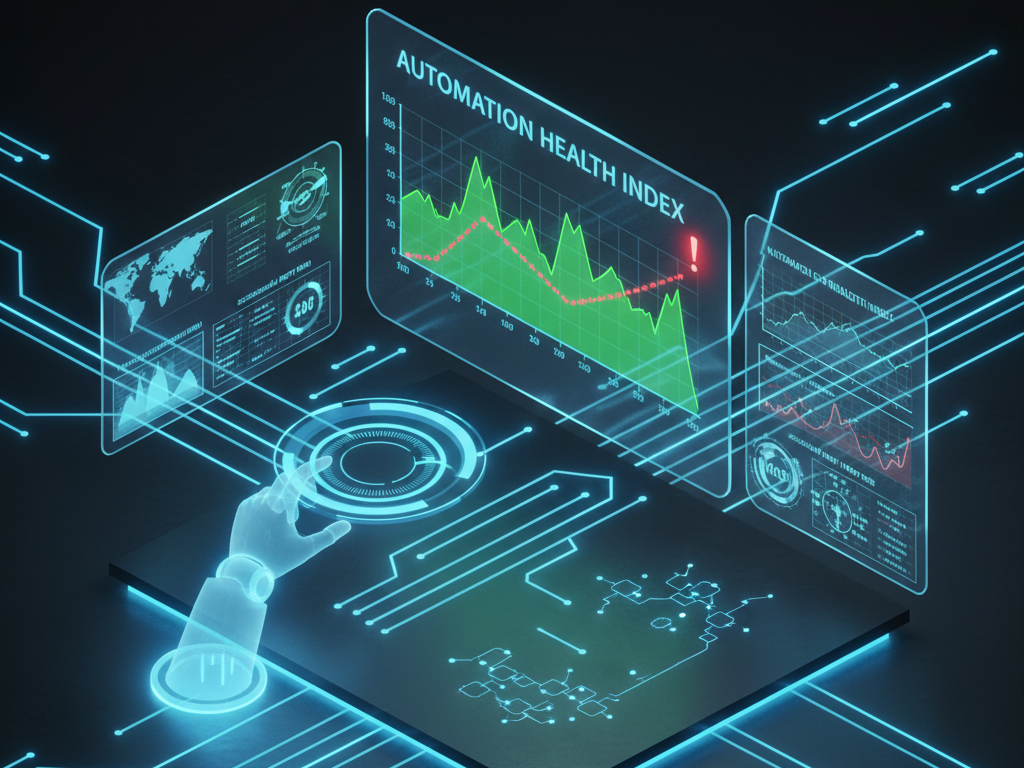
You must look beyond simple “up or down” alerts today. Therefore, you should learn about monitoring automation health with smart, predictive dashboards. Truly, waiting for a bot to fail costs your business a lot of time and money. Consequently, you can stay ahead by spotting tiny shifts in performance before they become big breaks.
Many people think that a dashboard is just a place to see past errors. But, the reality is that the best 2026 tools act like an early warning system. Always remember, a stable and fast system is a strong signal for any search engine. This ensures that your digital workflows stay smooth and your team stays productive. This approach requires you to focus on leading indicators, not just lagging ones. It helps you build a much more resilient automation stack for the long term. It makes your daily technical oversight feel much more strategic and very effective.
First, you must pick the right data points to watch every day. Why are some metrics better at predicting failure than others? Clearly, knowing a bot stopped is useful, but knowing why it is slowing down is much better. Therefore, you must track subtle signs of stress in your automated processes.
Here are several metrics that help you predict a coming failure:
Truly, these metrics act as a pulse check for your digital workers. But, you must also set clear baseline levels for what “normal” looks like. This helps your dashboard spot an anomaly as soon as it appears. It creates a very high standard for your monitoring automation health.
So, how do you organize all this data so it is easy to read? Truly, a good dashboard should tell a story in just a few seconds. Consequently, you should use visual cues to highlight the most important shifts in health. It acts as a mission control center for your entire automation fleet.
Here is how you can design your dashboard for maximum impact:
Furthermore, this improves your search engine performance by ensuring your backend is always fast. It makes your tech team look very proactive and ready for 2026 demands. This ensures that you fix a “yellow” alert before it ever turns into a “red” crisis. It creates a very fast and clear path for your operational stability.
The third phase involves adding a layer of intelligence to your monitoring. Clearly, a human cannot watch a hundred graphs at the same time. Therefore, you should use AI-driven tools to find patterns in your monitoring automation health data.
Firstly, AI can compare today’s performance to the last six months of history. This helps it find “silent” errors that do not trigger a standard alarm. Secondly, machine learning can predict when a bot might fail based on past cycles.
Furthermore, AI can automatically adjust your alerts so you do not get too many pings. Also, it can suggest the exact fix for a problem before you even open the dashboard. Lastly, remember that smart monitoring helps your search engine authority and site reliability. Truly, AI is your best partner for managing a large scale automation project. It allows you to grow your bot fleet without needing to grow your support team. This is why top firms use AIOps for their health checks today.
The fourth phase is where you turn your insights into actual results. Clearly, a dashboard is only useful if it leads to a quick action. Therefore, you must set up rules that trigger a fix as soon as the health score drops.
Firstly, set up a rule to restart a bot if its memory usage gets too high. This prevents a crash before the bot even knows it has a problem. Secondly, automatically move tasks to a backup server if the main one gets slow.
Furthermore, send a Slack or Teams alert to your lead developer for any “yellow” trends. Also, create a self-healing script that clears temporary files every night. Lastly, check your search engine ranking to see if better uptime helps your brand. Truly, proactive rules are your best tool for monitoring automation health. They turn a passive view into an active system that fixes itself. This ensures your business stays running while your team sleeps.
Finalizing your monitoring plan requires you to keep your data fresh and true. It needs you to update your metrics as your bots and apps change. Clearly, an old dashboard can give you a false sense of safety. Therefore, follow these simple tips to keep your monitoring automation health views perfect.
Firstly, review your bot baselines every month to keep them accurate. This helps you account for new software updates or faster internet speeds. Secondly, ask your business users which metrics matter most to their daily work.
Furthermore, keep your dashboard clean by removing any charts that no longer help. Also, use transition words in your internal reports to explain the data clearly. Lastly, check your search engine data to see if bot speed affects your web traffic. Truly, a great health view is a journey that leads to a much stronger business. It builds a path of trust that lets your whole team grow very fast. This secures your future in the digital world for a long time.
Latency trends are often the best sign because a slow bot usually breaks before a fast one.
You can start with tools like Power BI, Tableau, or the built-in analytics in your RPA platform.
Consistent uptime and fast data processing improve the reliability of your web services and SEO scores.
It is when a bot finishes a task but gives the wrong result without throwing an error code.
You should have it open on a screen for real-time viewing, but review the deep trends once a week.
Also Read: How to build autonomous workflows that humans lead
