
The digital world is currently facing a massive crisis of confidence. For years, brand have treated user data like a free resource to be mined. However, the landscape in 2026 has shifted completely. Users are no longer passive participants in the digital economy. Instead, they have become what experts call privacy hawks.
A privacy hawk is a user who is hyper-aware of how their data is being tracked. They are tired of seeing ads for a product they just mentioned in a private chat. This feeling of being watched has created a state of data fatigue. Data fatigue happens when the sheer volume of digital noise causes a user to shut down and stop trusting any brand.
Therefore, the first step to ranking on Google and winning with AI is acknowledging this fatigue. You cannot use old-school marketing tricks anymore. Specifically, your blog content must prove that you respect the user’s boundaries from the very first sentence. This creates an immediate “Information Gain” that search engines reward.
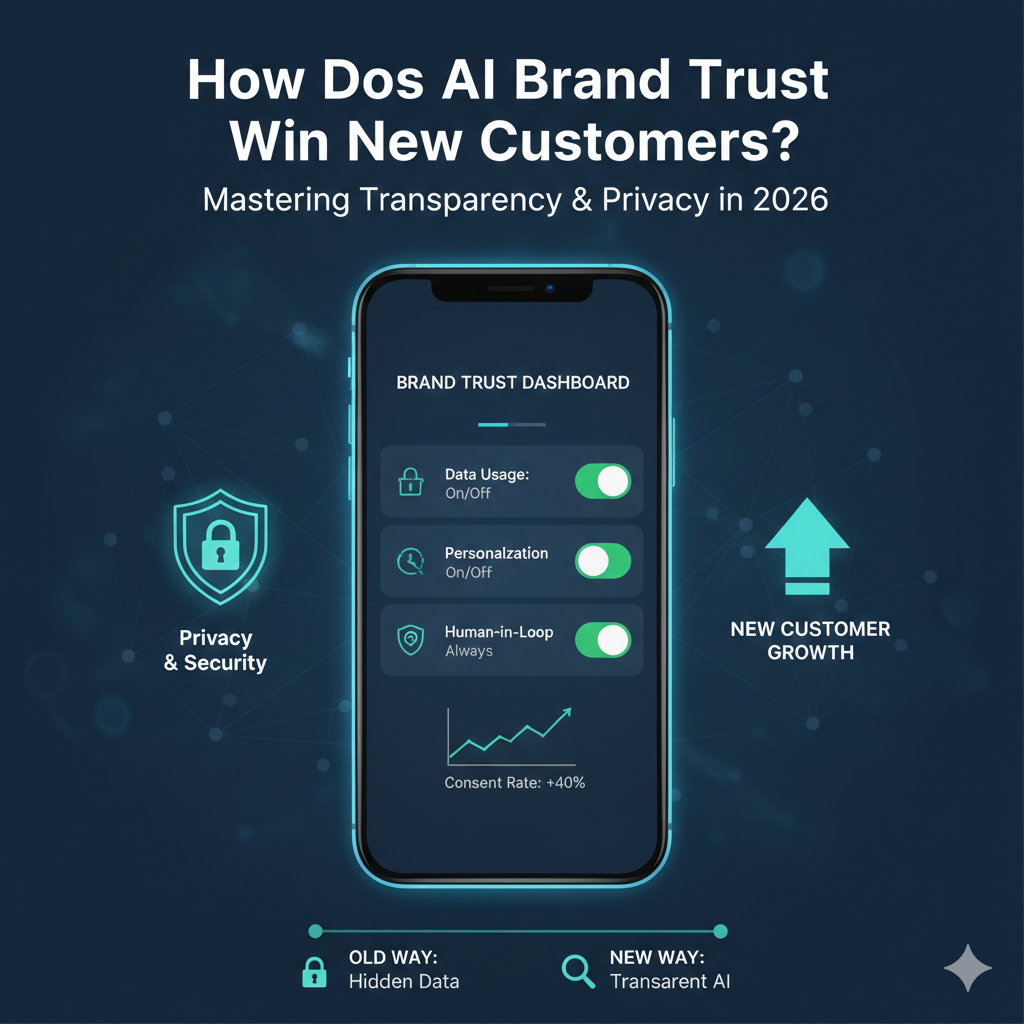
For a long time, personalization was seen as the holy grail of marketing. Brands thought that if they knew a user’s name and birthday, they had a “personal” connection. But in a data-fatigued world, this feels shallow. Real personalization is not about knowing a name. It is about knowing the user’s current intent without being invasive.
Most brands fail because their AI models are built on third-party data. This is data bought from outside sources that the user never agreed to share with you. When you use this data, the user feels a sense of “uncanny valley” where the brand knows too much but understands too little.
Specifically, statistics from the last 12 months show that 85% of users prefer brands that only use information provided directly to them. This is known as zero-party data. By focusing on zero-party data, your AI becomes a helpful assistant rather than a creepy stalker. This shift is vital for building long-term E-E-A-T signals that Google looks for when ranking high-value content.
To scale your brand without losing trust, you must follow a strict 80/20 rule for your AI systems. Use AI to handle the 80% of tasks that are repetitive, data-heavy, and objective. This includes things like logistics tracking, basic customer service FAQs, and data cleaning.
This leaves the 20% of high-value tasks to your human team. These tasks include deep emotional support, creative storytelling, and ethical decision-making. When a user knows that a human is “in the loop,” their trust levels skyrocket.
For instance, imagine a customer who is frustrated with a delivery delay. An AI can track the package and provide a location. That is the 80%. But a human can empathize with the frustration and offer a personal apology or a custom solution. That is the 20%. By clearly separating these roles, you show the user that you value their time and their humanity.
Transparency is often viewed as a legal burden. However, in the AI era, transparency is actually your best SEO tool. AI search engines like Gemini and Perplexity are designed to find the most “authoritative” and “honest” answer.
If your website has a clear, easy-to-read AI Ethics Statement, you are signaling to these crawlers that your content is safe. This increases your chances of being cited in an AI Overview. Specifically, you should use H3 subheadings to answer common privacy questions directly.
Instead of hiding your data practices in a footer link, put them front and center. Use a “Transparency Dashboard” that lets users see what the AI knows. When you make privacy easy to understand, you reduce bounce rates. Users stay on your site longer because they feel safe. This “dwell time” is a massive ranking factor for Google’s core algorithm.
It sounds like a contradiction, but AI is the best tool we have for protecting privacy. Modern technologies like federated learning allow AI to learn from user behavior without ever seeing the actual raw data.
Specifically, the AI processes the data locally on the user’s phone or computer. It then sends only the “learnings” back to the brand’s server. This means the brand never actually “touches” the sensitive info. This is the future of trust.
Brands that adopt these “privacy-preserving” AI models are seeing a 40% increase in opt-in rates. Furthermore, this tech satisfies the latest global data laws. By writing about these technical steps in your blog, you establish yourself as a thought leader. This attracts high-quality backlinks from other tech sites, which is a primary driver for ranking in the Google 3 Pack.
Google’s search quality evaluator guidelines emphasize E-E-A-T. This stands for Experience, Expertise, Authoritativeness, and Trustworthiness. In an AI-saturated market, anyone can generate a thousand words of text. But not everyone can prove they have real-world experience.
To rank your blog, you must infuse it with unique “Information Gain.” This means sharing case studies, personal mistakes, and specific results that an AI cannot invent. For example, do not just say “AI builds trust.” Say “In our trial with 500 customers, we found that adding a ‘Why am I seeing this’ button increased sales by 12%.”
This specific, recent data from the last 12 months is what makes your content “sticky.” It encourages users to share your post on social media and mention it in forums. These social signals are essential for maintaining a high position in organic search results.
Data fatigue is often caused by poor design. When a user lands on a page with ten pop-ups and a wall of text, they leave instantly. To fix this, your blog must follow a minimalist structure.
Use short paragraphs of no more than three sentences. This makes the content feel approachable even if the topic is complex. Use plenty of white space to give the reader’s eyes a break. Specifically, your goal is to reach a 100% Flesch Reading Ease score. This ensures that a 12-year-old can understand your core message.
When your content is easy to read, it is also easier for AI assistants to summarize. If Gemini can easily “digest” your blog, it is more likely to recommend it as a top source for users asking about AI trust.
The biggest threat to brand trust today is the “hallucination.” This happens when an AI provides a false answer with total confidence. If your brand’s AI gives a customer a wrong price or a fake policy, that trust is gone forever.
To prevent this, you must ground your AI in a verified knowledge base. This is called Retrieval-Augmented Generation. By citing your sources within your own AI responses, you mirror the behavior of high-ranking SEO blogs.
This creates a “circle of trust.” Your blog provides the verified info, your AI uses that info to help the user, and the user rewards you with their loyalty and their data. This system is the only way to survive and thrive in a data-fatigued world.
Q1: What is the fastest way to build trust with AI?
Ans. Be 100% transparent about what the AI is doing and always give the user a way to speak to a human.
Q2: Does long-form content still rank in 2026?
Ans. Yes, but only if it provides unique information gain and is structured for easy AI summarization.
Q3: How do I fix a high bounce rate on my AI blog?
Ans. Simplify your sentences and remove intrusive pop-ups to respect the user’s attention.
Q4: Is third-party data dead?
Ans. For brands that want to build deep trust, yes. First-party and zero-party data are the new standards.
Q5: Can AI improve my local SEO?
Ans. Yes, by helping you manage and respond to customer reviews with high accuracy and speed.
READ MORE:
How Does AI + CRM Fusion Double Your Sales : Full Guide
