Running a business takes a lot of energy. Hiring the right people takes even more effort. This is where AI for HR steps in to help.
AI for HR and talent management is no longer a futuristic idea. It is a practical solution that many companies already use. From screening resumes to predicting employee turnover, AI tools are reshaping how HR teams work.
Small startups and large enterprises alike face the same hiring pressures. Job postings attract hundreds of applicants within days. Reviewing every resume by hand simply is not realistic anymore.
At the same time, employees expect faster responses and smoother onboarding. They want clear communication and personalized support. Meeting these expectations manually puts enormous pressure on HR teams.
In this guide, you will learn how AI for HR supports hiring, onboarding, and retention. You will also discover simple ways to start using AI for HR in your own organization. By the end, you will understand why talent management technology is becoming essential for modern businesses.
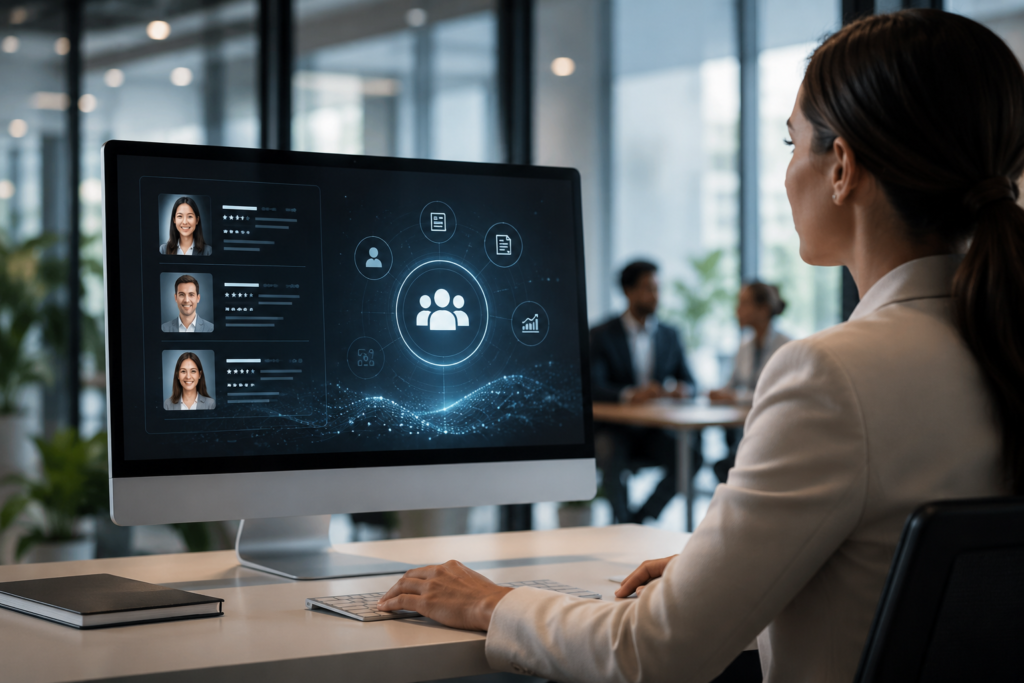
AI for HR refers to software that uses artificial intelligence to support human resources tasks. These tasks include recruiting, onboarding, performance tracking, and employee engagement.
Traditional HR processes often involve manual work. Sorting through resumes, scheduling interviews, and tracking employee data can take hours. AI for HR automates much of this work.
HR teams save time and reduce errors as a result. They can focus more on people and less on paperwork. This shift matters because talent management directly affects business growth.
Companies with strong talent management strategies tend to have lower turnover. They also report higher employee satisfaction. AI for HR supports these outcomes by making processes faster and more accurate.
Consider a mid-sized company hiring fifty new employees each year. Without automation, recruiters spend countless hours on repetitive tasks. AI for HR frees up that time for meaningful candidate conversations.
Many HR professionals worry that AI might replace human judgment. AI for HR, however, is designed to support decisions, not replace them. Final hiring choices still rest with human teams.
Technology works best when it complements human strengths. People bring empathy, context, and intuition to hiring decisions. AI for HR simply removes repetitive tasks that slow people down.
Recruitment is one of the most time-consuming HR tasks. AI for HR tools can scan thousands of resumes within minutes. This speeds up the hiring process significantly.
AI-powered applicant tracking systems, for example, can match candidate skills to job requirements. This reduces the time spent reviewing unqualified applicants. Recruiters can then focus on top candidates faster.
AI for HR also helps reduce unconscious bias in hiring. Many tools are designed to evaluate skills and experience objectively. This creates a fairer hiring process for all candidates.
Bias often creeps into hiring without anyone noticing. A name, a school, or a gap in employment can quietly influence decisions. AI for HR helps flag these patterns and encourages fairer evaluation.
AI chatbots can also answer candidate questions instantly. This improves the candidate experience and keeps applicants engaged. A smooth hiring process often leads to better talent acquisition outcomes.
Some platforms use AI to predict candidate success. They analyze past hiring data to identify patterns. This helps HR teams make smarter, data-driven decisions.
These predictions are not guesses pulled from thin air. They come from real performance data across similar roles. Recruiters gain a clearer picture before scheduling a single interview.
Interview scheduling itself eats up valuable time every week. AI for HR tools can coordinate calendars across multiple time zones automatically. This removes one more friction point from the hiring journey.
AI is not perfect, of course. Human oversight remains necessary to ensure fairness and accuracy. AI for HR, still, makes recruitment faster and more efficient overall.
Talent management goes beyond hiring. It includes employee development, performance reviews, and succession planning. AI for HR plays a valuable role in each of these areas.
AI tools, for instance, can track employee performance trends over time. This helps managers identify high performers early. It also highlights employees who may need additional support.
This kind of visibility used to take months to build manually. Spreadsheets and annual reviews only told part of the story. AI for HR turns scattered data into a clear, ongoing picture.
AI for HR can also recommend personalized training programs. By analyzing skill gaps, these tools suggest relevant courses. This supports continuous learning and career growth.
Employees often feel more valued when training feels relevant to them. Generic courses rarely inspire engagement or motivation. Personalized learning paths created by AI for HR tend to perform better.
Predictive analytics can flag employees at risk of leaving. This allows HR teams to intervene early. Companies can improve retention rates significantly as a result.
Succession planning becomes easier with AI for HR as well. The technology can identify potential leaders based on performance data. This ensures businesses always have a pipeline of ready talent.
Traditional succession planning often relied on guesswork and personal opinion. AI-driven talent management instead relies on real data. This reduces uncertainty and improves long-term workforce planning.
Adopting AI for HR requires careful planning. Jumping in without strategy can lead to poor results. Following best practices is essential, therefore, before rolling anything out.
Identify specific HR challenges you want to solve first. You may want to reduce hiring time or improve retention, for example. Clear goals help you choose the right AI tools.
Vague goals often lead to wasted budgets and disappointed teams. A platform bought without purpose rarely earns its cost. Specific, measurable goals keep AI for HR projects on track.
Involve your HR team early in the process. Their feedback ensures the chosen tools fit daily workflows. Employee buy-in is crucial for successful adoption.
Prioritize data privacy and security as well. AI for HR systems handle sensitive employee information. Choosing trustworthy vendors protects your organization and your employees.
Training is another important step. HR staff need proper guidance to use AI tools effectively. Powerful tools may go underused without training.
A new system is only as good as the people running it. Short workshops and simple guides go a long way. Comfort with the tool builds confidence across the whole team.
Monitor results consistently once the system is live. Track metrics like time-to-hire, turnover rate, and employee satisfaction. This helps you measure the real impact of AI for HR.
Small businesses can start with simple tools, such as AI-powered scheduling or resume screening. Larger organizations may benefit from full talent management platforms. Gradual implementation often works best either way.
AI for HR continues to evolve rapidly. New tools focus on employee wellbeing, engagement, and personalized career paths. This shift reflects a more human-centered approach to technology.
Many experts predict that AI will soon support real-time employee feedback. Managers could receive instant insights into team morale this way. Such tools could transform how companies respond to workplace challenges.
Imagine a manager noticing a dip in team engagement within days, not months. Quick insight allows quick action. Problems get addressed long before they grow into bigger issues.
AI for HR is expected to improve diversity and inclusion efforts too. Organizations can identify and correct biased practices by analyzing hiring patterns. This supports fairer and more inclusive workplaces.
Remote work has increased demand for AI-driven HR solutions as well. Virtual onboarding, digital training, and remote performance tracking rely heavily on AI tools. This trend is likely to continue growing.
Distributed teams need consistent processes regardless of location. AI for HR helps standardize onboarding and training across time zones. Employees get the same quality experience wherever they work.
AI for HR will likely become standard practice as technology advances. Companies that adopt it early may gain a real advantage in attracting and retaining talent.
AI for HR and talent management offer real, practical benefits. From faster hiring to smarter retention strategies, the impact is significant. Businesses that embrace AI for HR can save time, reduce costs, and improve employee experiences.
Success depends on thoughtful implementation, however. Combining AI tools with human judgment leads to the best outcomes. Staying informed will help your business stay competitive as AI for HR technology continues to grow.
Start small if you are unsure where to begin. Pick one HR challenge and test a single tool. Build confidence and expand from there as results come in.
Talent management will keep changing as technology improves. Teams that stay curious and open to new tools tend to adapt faster. AI for HR is simply one more way to support the people who keep your business running.
Read More:
AI for Operations Efficiency: What You Need to Know
