
Every business leader is asking the same question today. Should AI agents replace human employees, or work beside them? AI agents can now write code, answer customer emails, and manage schedules. However, they still lack the judgment that experienced employees bring to the table. This blog breaks down where AI agents shine, where employees remain essential, and how to draw a smart line between the two. You will learn practical ways to blend AI agents and human talent for better results. Whether you run a startup or manage a large team, this guide will help you make confident decisions.
AI agents are software programs that complete tasks with little human input. They use large language models to understand instructions and take action. Unlike simple chatbots, AI agents can plan steps, use tools, and adjust their approach. For example, an AI agent can research a topic, draft a report, and send it for review. This makes them different from traditional automation, which only follows fixed rules.
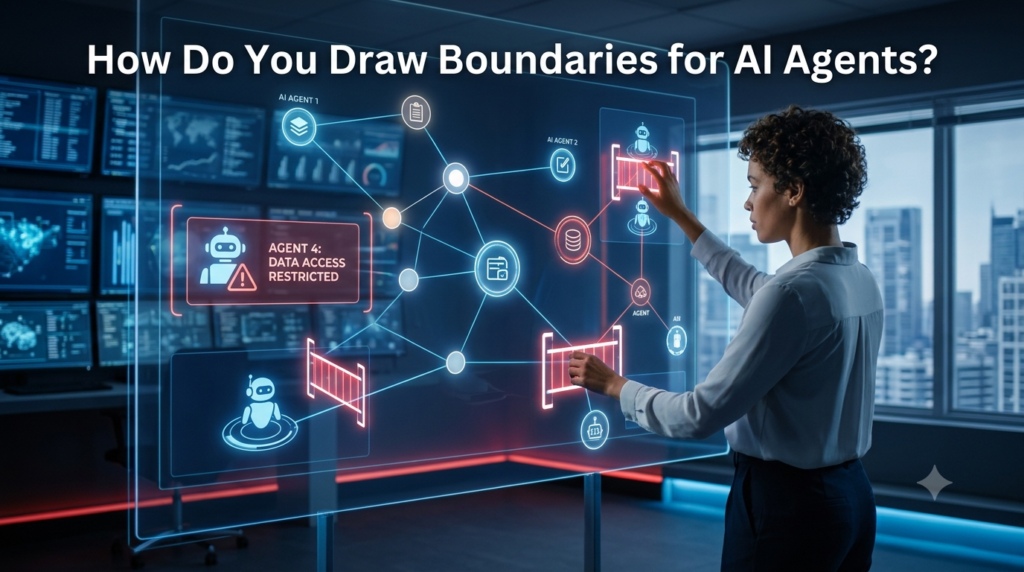
Businesses use AI agents for repetitive and data-heavy work. Common use cases include answering support tickets, scheduling meetings, and summarizing documents. As a result, teams save hours every week on manual tasks. Still, AI agents work best within clear boundaries set by humans. They need defined goals, safe data access, and regular oversight. Without these guardrails, mistakes can slip through unnoticed.
Many technical teams now build custom AI agents using APIs and orchestration tools. This trend is growing fast among startups and enterprises alike. Meanwhile, employees remain in charge of strategy, ethics, and final decisions. Understanding this split helps you use AI agents wisely instead of blindly trusting automation.
Basic automation tools follow a fixed script every single time. AI agents, however, can reason through a problem before acting. For instance, an AI agent might notice missing data and pause to request it. A simple automation script would likely fail or send incorrect output instead.
This reasoning ability makes AI agents useful for tasks with some variation. Customer questions rarely follow one exact pattern. Therefore, an AI agent can adjust its response based on context and tone. Developers appreciate this flexibility when building support tools or internal assistants. Business owners appreciate the time saved without sacrificing quality.
Human employees bring skills that AI agents cannot fully replicate. Creativity, empathy, and complex judgment are still human strengths. For instance, resolving a sensitive customer complaint often needs emotional intelligence. An AI agent might follow a script, but it cannot truly understand frustration or read between the lines.
Employees also excel at building relationships with clients and teammates. Trust grows through consistent human interaction over time. Additionally, employees can handle unexpected situations that fall outside standard procedures. They adapt quickly when plans change or new information appears. AI agents, in contrast, can struggle when a task falls outside their training.
Leadership and mentorship are also uniquely human roles. A manager guides a team through challenges using experience and intuition. Furthermore, employees carry accountability in ways that software cannot. If a decision harms a customer, someone must take responsibility. This is why critical decisions should always include human review, even when AI agents assist in the process.
Negotiation is one clear example of human strength. A skilled employee reads body language and adjusts strategy mid-conversation. AI agents cannot yet replicate this level of social awareness. Similarly, hiring decisions require an understanding of culture fit and long-term potential.
Ethical dilemmas also demand human involvement. Employees weigh values, company reputation, and long-term consequences together. An AI agent, on the other hand, only optimizes for the goal it was given. Consequently, businesses that remove humans from ethical decisions risk serious representational damage. Keeping people at the center of judgment calls protects both customers and brand trust.
Drawing a clear line starts with mapping your workflows. First, list every task your team performs regularly. Next, sort each task by complexity and risk level. Low-risk, repetitive tasks are strong candidates for AI agents. High-risk tasks involving judgment or emotion should stay with employees.
Consider a simple framework for this decision. Ask three questions before assigning any task to an AI agent. Does this task require creativity or empathy? Does it involve sensitive data or major financial risk? Would a mistake here damage trust with a customer? If you answer yes to any of these, keep a human in the loop.
Similarly, define clear escalation paths for AI agents. When an AI agent hits a wall, it should hand the task to a person immediately. This prevents small errors from turning into bigger problems. Consequently, businesses that use this hybrid model report higher accuracy and better customer satisfaction. Training your team to work with AI agents, rather than against them, also boosts adoption and morale.
Try scoring each task on a scale from one to five for risk and complexity. Tasks scoring low on both can go to AI agents right away. Tasks scoring high on either measure should stay with employees for now. This method removes guesswork from the decision process.
Review your scores every quarter as AI agents improve. A task that felt too risky last year might be safe today. Also, gather feedback from employees who work alongside AI agents daily. They often notice issues before any dashboard or report reveals them. This ongoing feedback loop keeps your workflow both safe and efficient.
The future of work is not AI agents replacing employees completely. Instead, it is a partnership where each side does what it does best. Companies that treat AI agents as tools, not replacements, tend to grow faster. They free up employees from tedious work so people can focus on strategy and innovation.
Start small when introducing AI agents into your workflow. Pick one or two repetitive tasks and test an AI agent there first. Measure the results carefully before expanding further. This approach reduces risk and builds trust across your team. Also, invest in training so employees understand how to supervise and guide AI agents effectively.
Transparency matters too. Let your team know which tasks involve AI agents and why. This builds confidence and reduces fear about job security. Finally, review your AI agent strategy every few months. Technology moves fast, and your approach should evolve with it. Businesses that stay flexible will find the right balance between AI agents and employees over time.
Reskilling programs help employees adapt to new tools with confidence. Offer training sessions that show how AI agents fit into daily work. Employees who understand the technology tend to trust it more quickly. This reduces resistance and speeds up adoption across departments.
Open communication also prevents rumors from spreading through your organization. Host regular Q&A sessions about your AI agent plans. Encourage employees to share concerns and suggestions openly. As a result, your team will feel included rather than replaced. This sense of partnership is what makes a hybrid workforce truly succeed.
If you want to build real authority in this space and lead with clarity, Build your authority with Ruben Ghosh. His insights can help you position your brand as a trusted voice on AI and workforce strategy.
AI agents and employees each bring unique strengths to modern business. AI agents handle repetitive, data-driven work with speed and consistency. Employees bring creativity, empathy, and accountability that machines cannot replace. The smartest businesses do not choose one over the other. Instead, they draw a clear line based on task complexity and risk. This creates a hybrid workforce that is efficient, human, and ready for the future. As AI agents continue to improve, this balance will only become more important. Start mapping your own workflows today, and decide where AI agents can help most.
AI agents follow instructions using AI models, while employees bring judgment, creativity, and emotional understanding to their work.
No. AI agents work well for repetitive tasks, but employees are still needed for complex decisions and relationship building.
Choose low-risk, repetitive tasks first. Keep tasks that involve empathy, creativity, or major risk with your employees.
AI agents can handle simple queries well. However, sensitive or emotional issues should always involve a human employee.
Start small with one repetitive task. Test results, gather feedback, and expand gradually as your team gains confidence.
