
Personalization now serves as the heartbeat of modern digital marketing because users expect tailored experiences. Artificial Intelligence makes this possible at a scale that human teams simply cannot match. This guide will walk you through how AI transforms your connection with customers.
Many brands still send the same message to every person on their list. This approach creates a massive disconnect because individual needs vary greatly. You might feel frustrated when you see ads for products you already bought. Marketing without personalization is like shouting into a void and hoping someone hears you.
The solution lies in using data to understand what your audience truly wants. AI can analyze millions of data points to find patterns in seconds. Once you apply these insights you will see your engagement rates climb. I have seen brands double their revenue by simply making their messages more relevant.
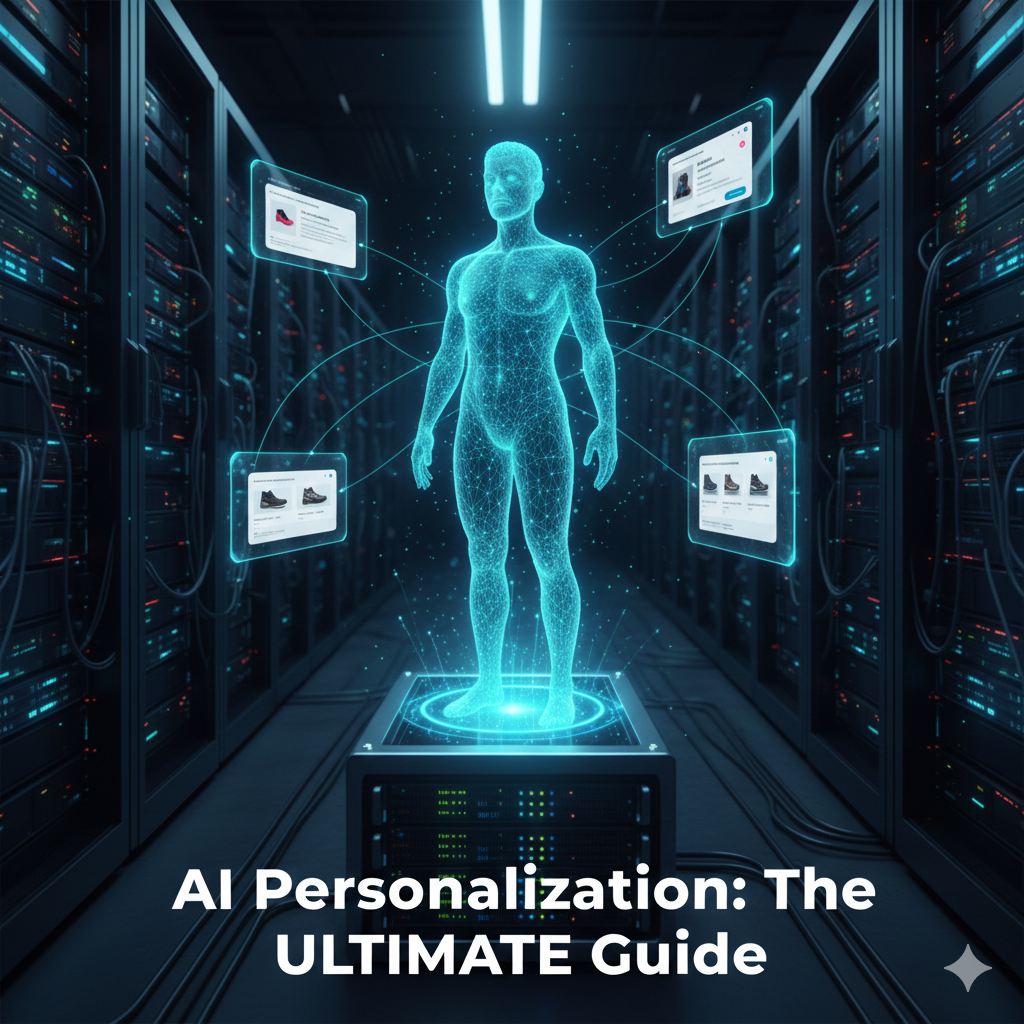
AI uses machine learning to predict future behavior based on past actions. It looks at what people click on and how long they stay on a page. The technology then creates a custom path for every single visitor. This process happens in real time so the user always sees fresh content.
You can use these tools to segment your audience automatically. Traditional segmentation takes hours of manual work and often misses the mark. AI does not get tired or overlook small details in the data. Therefore you get a much more accurate picture of your customer base.
Email remains one of the most powerful tools for driving sales today. However a crowded inbox means your message must stand out immediately. AI helps by optimizing subject lines to increase your open rates. It can even predict the best time to send an email to each person.
Predictive content allows you to show different products to different subscribers within one email. One person might see hiking boots while another sees running shoes. This level of detail makes the subscriber feel like you truly know them. Consequently they are much more likely to click through and make a purchase.
Digital advertising has become more expensive and competitive than ever before. You cannot afford to waste your budget on people who will never buy. AI solves this by finding high value users who look like your best customers. It optimizes your bids to ensure you get the most out of every dollar.
Dynamic creative optimization allows the ad itself to change based on the viewer. The background colors or the call to action might shift to match a user’s preference. This creates a seamless experience that feels less like an ad and more like a suggestion. You will notice a significant drop in your cost per acquisition.
Your website is your digital storefront and it should welcome everyone personally. AI can change the homepage layout based on where a visitor came from. If a user arrives from a social media post about shoes the site should show shoes. This reduces friction and makes the journey toward a sale much faster.
Product recommendations are perhaps the most famous use of web AI today. Think about how major retailers suggest items that perfectly complement your cart. These systems use collaborative filtering to see what similar users purchased. It is an easy way to increase your average order value without extra effort.
You must balance deep personalization with a respect for user privacy. Customers want personal experiences but they also worry about their data. Always be transparent about what information you collect and how you use it. This transparency builds trust which is the foundation of any long term brand relationship.
Regulations like GDPR and CCPA have changed how we handle digital information. AI can actually help you stay compliant by identifying sensitive data automatically. You should focus on first party data that users give you directly. This approach is safer and often provides much higher quality insights for your AI.
Starting with AI might seem overwhelming because there are so many tools available. You should begin by identifying one area where personalization will have the biggest impact. For many businesses this is either email marketing or product recommendations. Choose a tool that integrates easily with your existing software.
Gathering clean data is the most important step in the entire process. If your data is messy then your AI will make poor predictions. Take the time to audit your current data sources before you flip the switch. Once you have a solid foundation you can scale your efforts across all channels.
You need to track the right metrics to see if your AI is working. Click through rates and conversion rates are the most obvious places to start. You should also look at customer lifetime value to see long term trends. A personalized experience should keep people coming back to your brand.
A/B testing is still vital even when you use advanced AI tools. You should test the AI’s recommendations against a static set of rules. This allows you to prove the return on investment for your new technology. Most brands find that AI consistently outperforms manual efforts over time.
The next frontier of personalization involves voice search and visual search. People are starting to ask their devices for help in a very natural way. Your content must be ready to answer these specific and conversational questions. AI will be the tool that helps you parse this intent.
Hyper personalization will eventually mean that no two people see the same internet. Every touchpoint will be uniquely crafted for the individual in that exact moment. This sounds like science fiction but the technology is already being built. Staying ahead of these trends will give you a major competitive edge.
AI personalization is no longer a luxury for big corporations only. Small businesses can now access these tools to compete on a global scale. By focusing on the user and their needs you create a better brand. The journey toward a personalized future starts with a single step.
If you want to grow your business you must embrace this change today. Start by auditing your current marketing to see where personalization is missing. Then look for an AI partner that matches your specific goals and budget. Your customers will thank you with their loyalty and their wallets.
1 What is AI personalization?
AI personalization is the use of machine learning to deliver tailored content and experiences to individual users based on their data.
2 How does AI help in email marketing?
AI helps by predicting the best send times, optimizing subject lines, and showing personalized product recommendations to each subscriber.
3 Is AI personalization expensive for small businesses?
Many affordable tools now exist that allow small businesses to implement AI features without a massive upfront investment.
4 Does personalization affect user privacy?
It can if not handled correctly but being transparent and using first party data helps maintain trust and compliance.
5 What is the first step to start using AI in marketing?
The first step is to clean your data and choose one specific channel like email to test a personalization tool.
Also Read: Why Voice of Customer (VoC)analysis needs LLMs now
