
You must move faster than ever to win in business today. Therefore, you should learn why Time-to-Execution is the new competitive metric. Truly, great ideas mean nothing if you cannot make them happen very fast. Consequently, you can beat your rivals by turning plans into actions right away.
Many people think that being first to market is the only thing that matters. But, the reality is that the fastest execution often brings lasting success. Always remember, a nimble business is a strong signal for any search engine. This ensures that your brand stays relevant and your customers get what they need. This approach requires you to look at every step from idea to launch. It helps you build a much more agile company for the long term. It makes your daily work feel much more strategic and very effective.
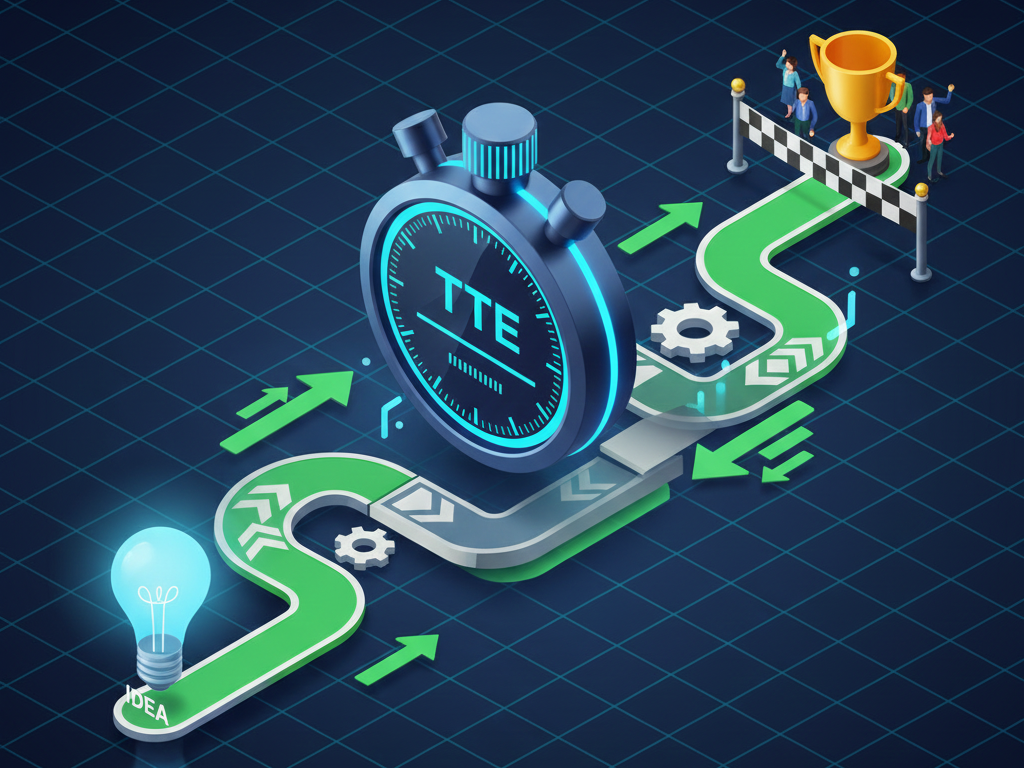
First, you must define exactly what Time-to-Execution means for your firm. Why is it different from just “speed” or “efficiency”? Clearly, TTE measures the full journey from a raw concept to a finished product or service. Therefore, it tracks how fast you can turn a strategy into a real-world result in 2026.
Here are several reasons why TTE is crucial for modern business:
Truly, TTE is about more than just speed; it is about strategic speed. But, you must also ensure that speed does not hurt your final quality. This keeps your brand’s reputation high and prevents any costly errors for you. It creates a very professional and high standard for your daily work.
So, how do you actually make your execution faster in 2026? Truly, every business has slow points that stop progress cold. Consequently, you should focus on finding and removing these “bottlenecks” today. It acts as a direct path to a much smoother and quicker operation.
Here is how you can find and fix your TTE delays:
Furthermore, this improves your search engine performance by making your internal systems faster. It makes your company look very organized and ready for 2026 challenges. This ensures that your valuable time is not wasted on needless waiting. It creates a very fast and clear path for your operational success.
The third phase involves using smart methods and tech to speed things up. Clearly, you cannot just wish for faster execution; you must build it. Therefore, you should invest in agile frameworks and automation tools.
Firstly, adopt Agile or Scrum methods for your projects to break tasks into small, fast cycles. This allows your team to finish work in short bursts and adapt quickly. Secondly, use project management software like Asana or Trello to track every step.
Furthermore, automate repetitive tasks with AI tools or simple scripts in 2026. Also, create clear decision-making pathways so that managers can approve faster. Lastly, remember that a nimble company helps your search engine authority and trust. Truly, the right tools and strategies are your best friend for a better TTE. It allows you to transform a slow process into a rapid growth engine. This is why top tech firms prioritize these methods every single day.
The fourth phase is where you track your progress to ensure you are actually faster. Clearly, you need solid data to prove that your TTE is improving. Therefore, you must establish key metrics to monitor your execution speed today.
Firstly, measure the “Cycle Time” of your key processes from start to finish. This helps you benchmark how long it takes to deliver real value. Secondly, track the “Lead Time” from the first idea to the customer’s hands.
Furthermore, look at the “Throughput” to see how many tasks your team finishes per week. Also, use “Deployment Frequency” to count how often you release new updates. Lastly, check your search engine ranking to see if faster service helps your site. Truly, consistent measurement is your best tool for staying ahead of the game. It turns a vague goal into a series of clear, measurable wins for you. This ensures your business stays sharp and responsive to market needs.
Finalizing your plan requires you to make speed a core value of your firm. It needs you to encourage your team to embrace fast action and smart risks. Clearly, a strong culture of execution comes from the top down. Therefore, follow these simple tips to embed TTE thinking into your daily operations.
Firstly, reward teams that deliver quickly and learn from their fast experiments. This helps everyone see the value of rapid execution in 2026. Secondly, empower your staff to make decisions without needing endless approvals.
Furthermore, conduct “post-mortems” after every project to learn what went well and what slowed things down. Also, use transition words in your internal updates to keep communication clear and concise. Lastly, check your search engine data to see if being fast helps your brand image. Truly, a fast path is a journey that leads to a much better brand. It builds a path of innovation that lets your whole team grow very fast. This secures your future in the digital world for a long time.
No, TTE is vital for any business, from manufacturing to service industries, to deliver value faster.
Efficiency focuses on doing tasks right. TTE focuses on doing the right tasks quickly from idea to delivery.
It’s any point in your process where work piles up and slows down the entire system.
Not if done right. Smart TTE focuses on quick, iterative improvements, maintaining high quality through feedback.
Faster product launches and updates (driven by good Time-to-Execution) can improve user experience and signal freshness to search engines.
Also Read: Security and Compliance in AI Workflows — What to Know
