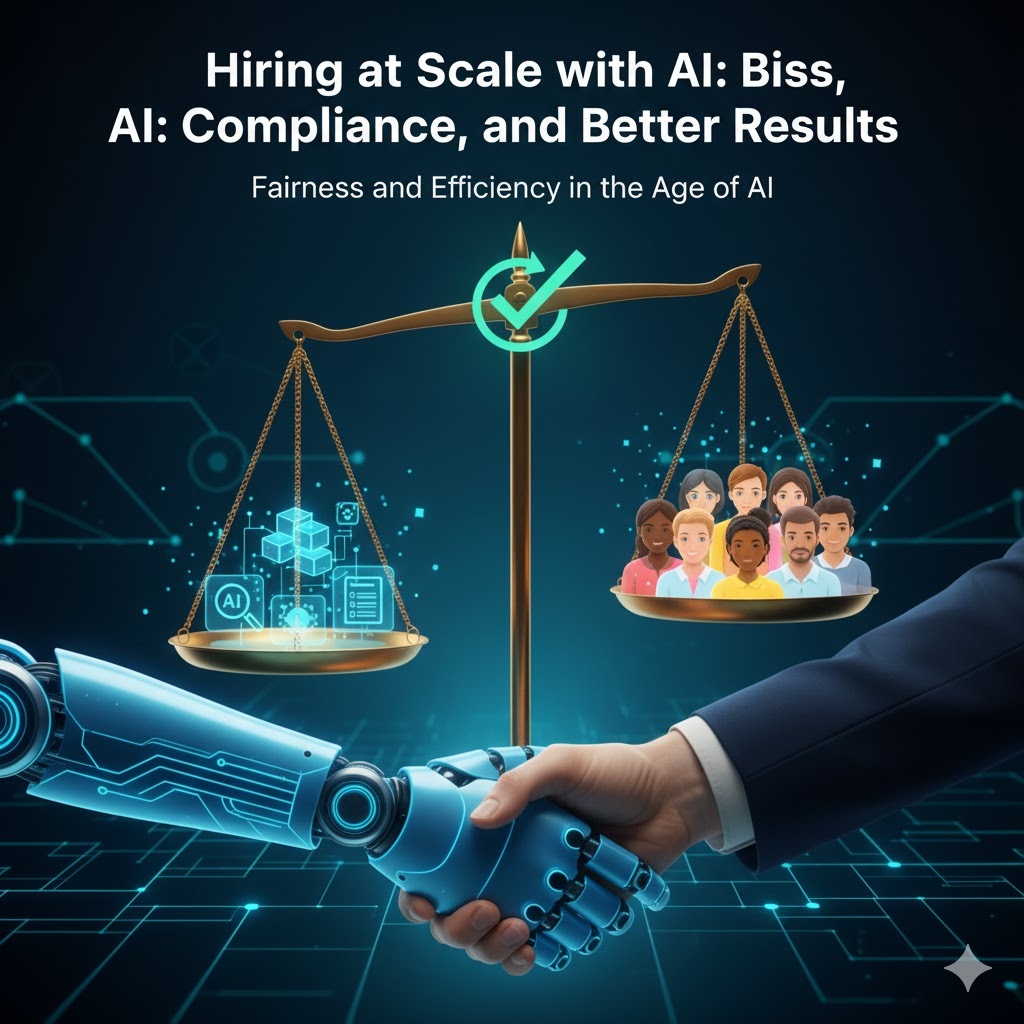
Hiring at scale is a huge task. Finding top talent quickly often seems impossible. Now, AI recruiting promises to make this process faster and smarter. AI tools can screen many resumes. They can even analyze interview responses. These tools offer speed and efficiency, which are key for growth. However, this power brings big risks. Legal problems and hidden biases are real worries. Without care, AI can make hiring less fair, not more. Therefore, companies must use AI wisely. They need to focus on bias mitigation and compliance. This ensures that AI recruiting truly helps build better, more diverse teams.
Imagine screening thousands of applications in minutes. AI can do this. It quickly finds candidates who match your job needs. This saves hiring teams a lot of time. It lets them focus on talking to the best people. AI can also help create structured interviews. These interviews ask the same questions of all candidates. This makes the hiring process more consistent and fair.
Furthermore, AI recruiting can help reach more diverse talent. It can reduce human bias in initial screening. This happens if the AI is set up correctly. By using data, AI can suggest candidates who might be overlooked by human eyes. This improves efficiency greatly. It moves companies towards hiring at scale faster. When done right, AI can boost your hiring speed and quality.
AI learns from data. If this data has past human biases, the AI will learn them too. This is a big problem for AI recruiting. For example, if past successful hires were mostly men, AI might favor male candidates. This happens even if women are just as skilled. Such hidden biases can lead to unfair hiring. They can also create less diverse teams.
This risk is not small. Biased AI can stop talented people from getting jobs. It can hurt a company’s image. Therefore, bias mitigation is vital. Companies must actively test their AI tools. They must look for unfair patterns. This requires constant review. It needs a clear plan to make the AI fairer over time. Otherwise, AI recruiting creates bigger problems than it solves.
Using AI in hiring also brings legal risks. Laws like those from the EEOC aim to prevent discrimination. Companies must ensure their AI recruiting tools follow these laws. This means the AI must not unfairly screen out candidates based on race, gender, age, or other protected traits. Proving compliance can be hard. AI models are complex.
Therefore, companies need strong safeguards. They need transparent AI tools. They also need clear rules for how AI is used. It is smart to work with legal experts. They can help check the AI systems for possible problems. This ensures that fair hiring practices are kept. Ignoring compliance can lead to big fines and lawsuits. So, being careful about legal issues with AI recruiting is a must.
To use AI well, follow these steps:
By following these best practices, companies can lower bias risks. They can also ensure compliance with laws. This leads to better results in hiring.
When companies manage AI risks well, the rewards are big. Fair hiring with AI leads to more diverse teams. Diverse teams make better decisions. They drive more innovation. This helps companies grow faster. AI recruiting can identify hidden talent pools. It can speed up hiring without sacrificing quality.
Ultimately, smart use of AI helps build a strong, inclusive workforce. This boosts a company’s image. It helps meet goals for diversity, equity, and inclusion (DEI). So, while hiring at scale with AI has risks, the benefits are worth it. With careful planning and constant checks, AI can truly change hiring for the better.
1. What is the biggest risk of using AI in hiring?
The biggest risk is AI bias. If AI learns from biased data, it can unfairly screen out qualified candidates.
2. How do structured interviews help reduce bias?
Structured interviews ask all candidates the same questions. This makes the interview process more consistent and objective. It helps compare candidates fairly.
3. What does “compliance” mean in AI recruiting?
Compliance means ensuring AI hiring tools follow anti-discrimination laws. For example, laws from the EEOC in the US prevent unfair screening.
4. Can AI completely remove bias from hiring?
No, AI cannot completely remove bias. It can help reduce human biases, but it needs careful setup and constant human review to avoid learning and repeating biases from data.
5. Why is regular auditing of AI recruiting tools important?
Regular auditing is important to find and fix any hidden biases. It ensures the AI tools stay fair and legal over time.
Also Read: Keyword Strategy in a Generative Search World (SGE/AI Overviews)
